


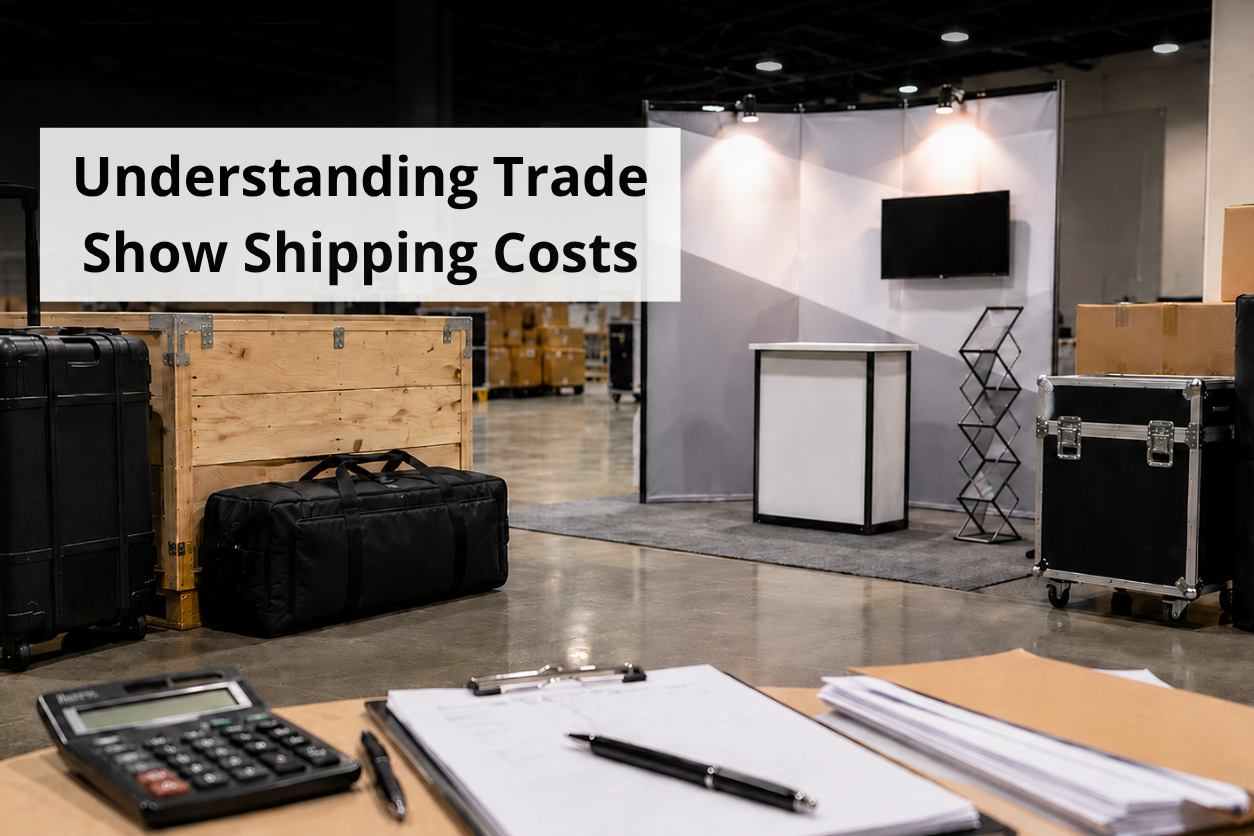
Quick Summary:
- Trade show shipping costs vary based on shipping method, size, weight, distance, delivery timeline, and delivery location.
- Choosing between advanced warehouse and direct-to-site shipping to trade shows affects price.
- Knowing what freight class you need is essential for accurate shipping estimates.
- Planning ahead helps avoid extra fees when shipping to trade shows.
- Get better value by understanding how domestic trade show shipping works.
- There is a trade show specific freight class that is recommended when shipping to events because they will wait in long delivery lines where many freight shippers will not.
Smart Shipping Decisions Begin with Knowledge and Planning
Shipping your display to a trade show isn’t as simple as mailing a package—it requires careful planning, budgeting, and understanding of logistics. Many businesses underestimate trade show shipping costs, only to be shocked by the price when they need to ship their exhibit.
Getting your booth to the venue safely, on time, and within budget requires a clear understanding of costs, shipping options, and logistics. With smart planning, companies can reduce stress, prevent costly delays, and allocate resources effectively.
In this post, we’ll discuss event shipping costs and options so you can make the right shipping decision for your business.
What Influences Trade Show Shipping Costs?
Several factors can impact the cost of shipping to a trade show. Understanding these moving parts can help you plan more effectively and avoid unexpected expenses:
- Freight Weight and Dimensions: Heavier and bulkier shipments cost more to transport due to space and handling requirements. Also note that when shipping with carriers like UPS and FedEx, you are billed by dimensional weight, not actual weight.
- Travel Distance: Longer distances generally increase shipping costs, especially when crossing regions or borders.
- Freight Class: The classification of your shipment, based on density and handling characteristics, affects the rate charged by carriers.
- Shipping Timeline: Expedited or last-minute deliveries are typically more expensive than shipments scheduled well in advance.
- Additional Services: Special handling, liftgate usage, inside delivery, or deliveries outside regular hours can add to your overall shipping bill.
- Delivery Location:
- Advance Warehouse: Shipping to an advanced warehouse can offer more flexible timing and reduce stress on move-in day.
- Direct to Show Site: Shipping directly to the venue can save on warehousing costs, but may be more expensive to ship due to time and date-sensitive delivery windows. If you are shipping to a show, it’s smart to use a trade show-specific freight carrier because sometimes drivers have to wait in long delivery lines. Non-event carriers will often leave the line and attempt delivery later or the next day, which may not work for your show, resulting in off-target shipping fees and installation delays.
- Advance Warehouse: Shipping to an advanced warehouse can offer more flexible timing and reduce stress on move-in day.
By accounting for these elements, you can better manage your trade show logistics and stay within budget.
Choosing Between Advanced Warehouse and Direct-to-Show Shipping
When preparing to exhibit at a trade show, one of the most critical logistics decisions you'll face is how to ship your materials. The two primary options are shipping to an advanced warehouse or shipping directly to the show site. Each method has its pros and cons depending on your budget, timeline, and risk tolerance.
Shipping to an Advanced Warehouse
Shipping your exhibit materials to an advanced warehouse means your items arrive and are stored at a designated location before being delivered to your booth space at the show venue. This option is generally considered the safer and more reliable method for several reasons:
- Early Delivery and Setup Assurance: Materials shipped to the advanced warehouse are typically delivered to your booth space before the exhibitor move-in begins, giving you a head start on setup.
- Predictability and Peace of Mind: You don’t need to worry about traffic delays, missed delivery windows, or onsite congestion that can occur with direct-to-show shipping.
- Support and Flexibility: If any issues arise (e.g., missing items, damaged crates), they can often be resolved before the event begins.
Shipping Directly to the Show Site
Opting to ship directly to the show site means your materials bypass the advance warehouse and arrive at the venue during a specific delivery window, usually just before or during exhibitor move-in hours.
Generally speaking, shipping your trade show booth materials to an advanced warehouse is recommended but if needed, shipping directly to a show can buy you extra time. Also, some displays like digital LED screens are often only shipped directly to the show.
Despite the ability to add extra transit days, direct-to-show shipping carries greater logistical risks:
- Tight Delivery Windows: If your carrier misses the specified time slot, your freight may be delayed or even refused.
- On-site Congestion: Show site docks can be chaotic, leading to long wait times or misplaced shipments.
- Limited Recourse: If your items are damaged or go missing, there’s often little time to resolve the issue before the show opens.
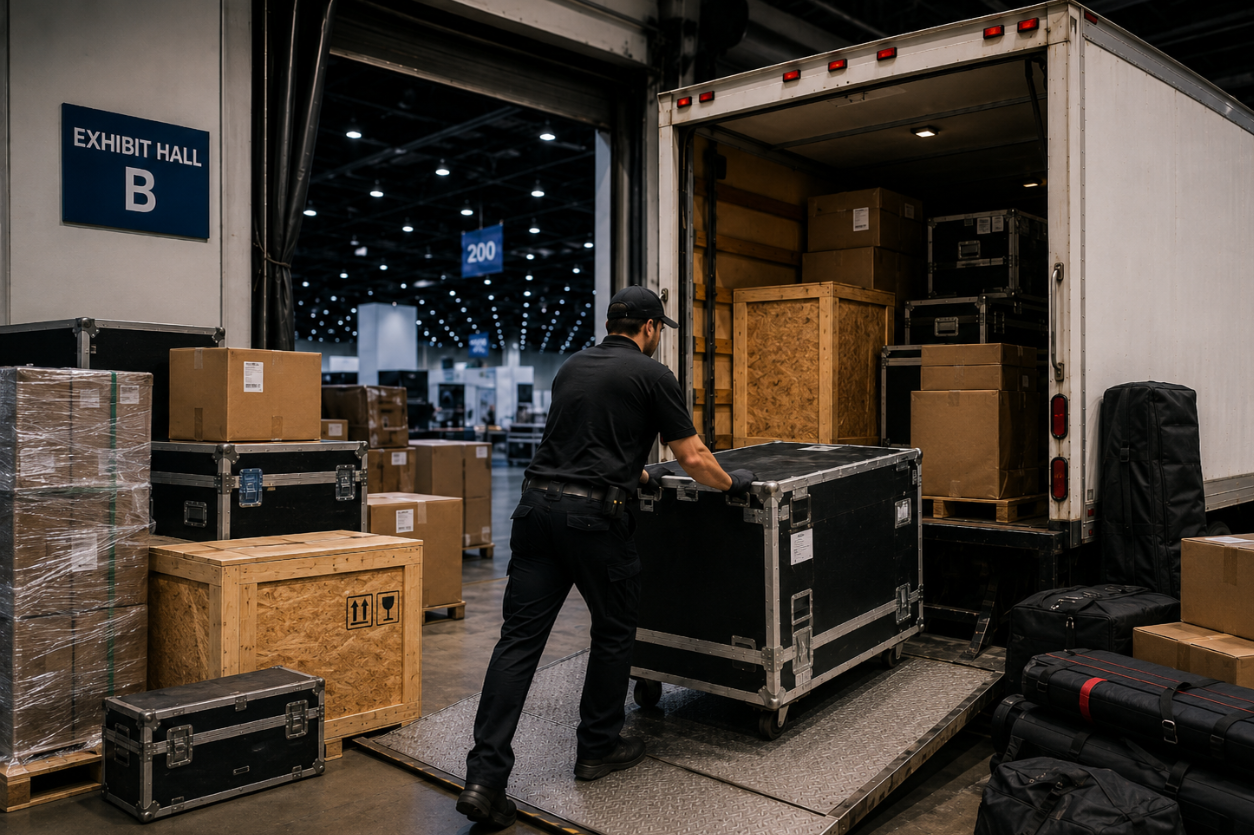
Domestic Trade Show Shipping Tips
When managing domestic trade show shipping, timing is everything. Delivering your booth materials during the designated window(s) is critical to ensure a smooth setup process. Here are some key strategies to follow:
- Coordinate Delivery Windows: Familiarize yourself with the event’s target move-in schedule and confirm when freight must arrive to avoid late fees or missed deliveries. It is essential to hit these times to avoid returned packages or added fees.
- Use Protective Packaging: Invest in durable, reusable crates or cases that can withstand multiple shipments and protect your exhibit items.
- Choose Reliable Freight Carriers: Partner with freight companies that specialize in trade show logistics, as they understand the importance of punctuality and venue-specific procedures. One partner we really like is Trinity Logistics.
- Standard Shipping Carriers: Common domestic carriers like UPS and FedEx often handle smaller trade show display shipments. They are best suited for advanced warehouse, home, office, and hotel deliveries, although they are capable of delivering to a show site.
- Label Everything Clearly: Each crate or package should include your company name, booth number, show name, and any handling instructions. Color-coded labels and duplicate copies can also help prevent misplacement.
- Follow Show Guidelines: Review the exhibitor manual to ensure compliance with the event’s shipping requirements, including paperwork, deadlines, and documentation.
By planning ahead and selecting the right partners, you can avoid misrouted materials, costly delays, and unnecessary stress on the show floor.
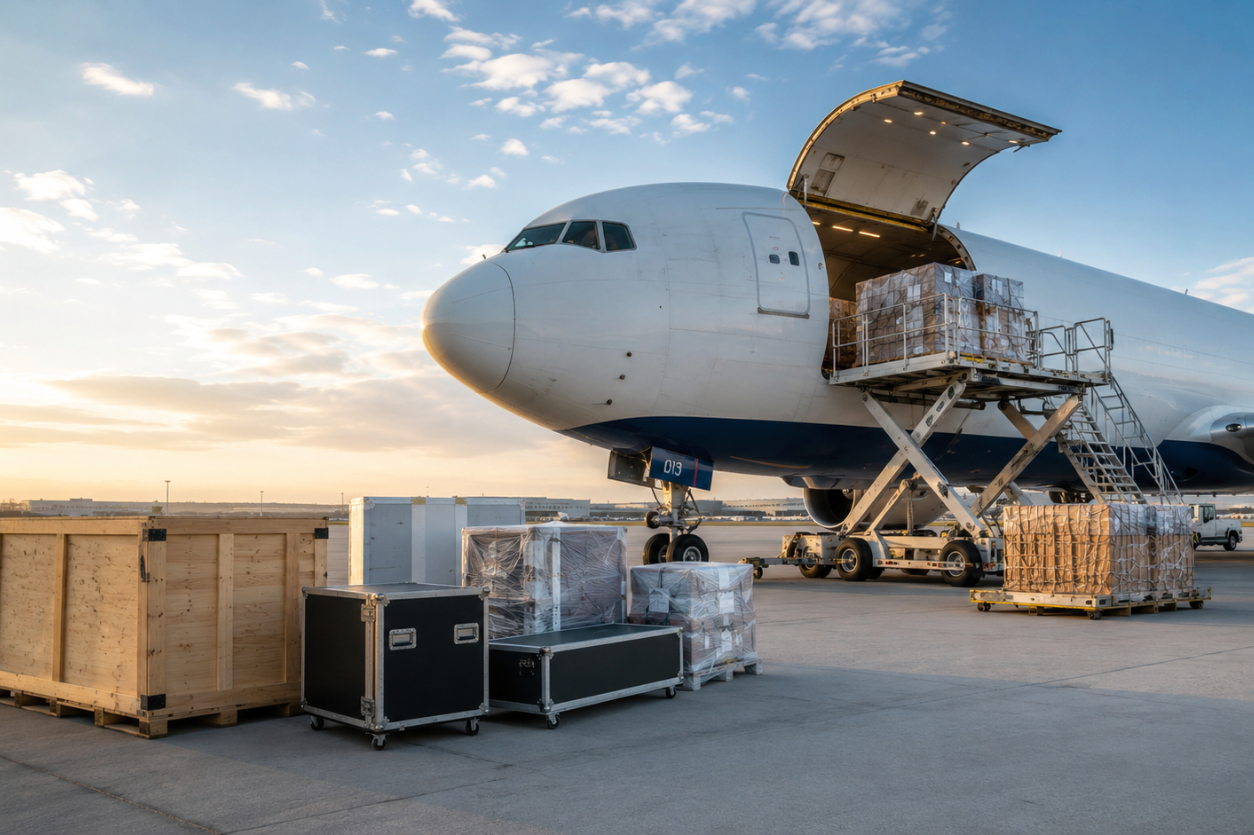
International Trade Show Shipping Tips
Shipping to an international trade show adds layers of complexity beyond domestic logistics. To succeed, you’ll need to account for customs regulations, longer timelines, and cross-border coordination. Here’s how to prepare:
- Start Early: International shipping often requires more lead time due to customs clearance, potential port delays, and international transit schedules.
- Understand Customs Requirements: Work with a freight forwarder experienced in trade show logistics to prepare necessary documents, such as commercial invoices, packing lists, and certificates of origin. Inaccurate paperwork can result in your shipment being held at customs or returned.
- Use a Customs Broker or Freight Forwarder: These professionals streamline the import/export process, ensuring that your materials clear customs efficiently and arrive on time.
- Consider Temporary Import Bonds (TIBs) or Carnets: These tools allow you to bring goods into a country temporarily without paying duties or taxes, provided the items will be re-exported.
- Track Shipments Closely: Delays in international shipping are more common, so choose carriers that offer real-time tracking and proactive updates.
- Check Voltage and Compatibility: If your booth setup includes electronics, ensure they are compatible with the destination country’s electrical systems and bring the necessary adapters or converters.
- Insure Your Shipment: International shipping involves more risk. Invest in cargo insurance that covers loss, theft, or damage in transit and during customs inspections. Proper preparation, expert partners, and a strong understanding of international requirements can turn a potentially stressful process into a streamlined, successful logistics plan.
How Do I Ship to a Trade Show?
How do I ship to a trade show? Start by reviewing the exhibitor manual for instructions and deadlines. Then, coordinate with a freight company experienced in trade show exhibit shipping, pack all items securely, and label them with your booth number, company name, and show name. Provide detailed instructions to your carrier and confirm delivery times with the venue.
Understand Freight Class for Accurate Estimates
What is the freight class for trade show materials? Most trade show booth shipping materials fall under freight class 125, but this can vary based on density and packaging. The wrong class can lead to reclassification charges. Confirm your freight class with your carrier for accurate rate estimates and smoother transit.
Avoid Hidden Event Shipping Fees and Delays
Late shipments, oversized crates, or unclear labeling can lead to extra costs and delays. Budget for material handling (also called drayage), which is the fee for moving freight from the dock to your booth. Avoid unnecessary charges by consolidating shipments, staying within size limits, and double-checking all paperwork before shipping to trade shows.
Choosing the Right Carrier for Trade Show Exhibit Shipping
Not all freight companies are experienced in trade show exhibit shipping. Select a carrier with a proven record in the industry that understands the timing, paperwork, and handling standards required. This helps reduce risks of damage, misrouting, or late arrivals—issues that can derail your exhibit setup and add major costs.
Final Thoughts: Know the Costs, Control the Outcome
Budgeting for trade show shipping is about more than just finding the lowest rate—it’s about reliability, timing, and risk reduction. By choosing the right delivery method, understanding the impact of freight class, and working with experienced partners, you can avoid unnecessary costs and ensure a smooth show setup. Whether you’re sending materials across the state or across the country, proper planning makes all the difference. If you have any questions, work with our team of experts at MODdisplays.


.jpg)

.png)

.avif)


